
Customer Ledger
Track every sale, payment, refund, credit note, and adjustment across all your customers in one place, or drill into an individual customer's ledger.
The Ledger page gives you a complete financial record of all your customer transactions. You can view a consolidated ledger across all customers at once, or click into any individual customer to see their dedicated ledger with a running balance.
Navigate here from the sidebar: Customers → Ledger.
Page Layout
The Ledger page is split into two panels:
Left panel: Customer list Shows all your customers with their name, address, and individual outstanding balance in red. The total outstanding across all customers is shown at the bottom. Use the search bar to find a specific customer instantly. Click View All Customers to go back to the full Customer List page.
Right panel: Ledger entries Shows the transactions for the selected customer, or all entries across every customer if no customer is selected.
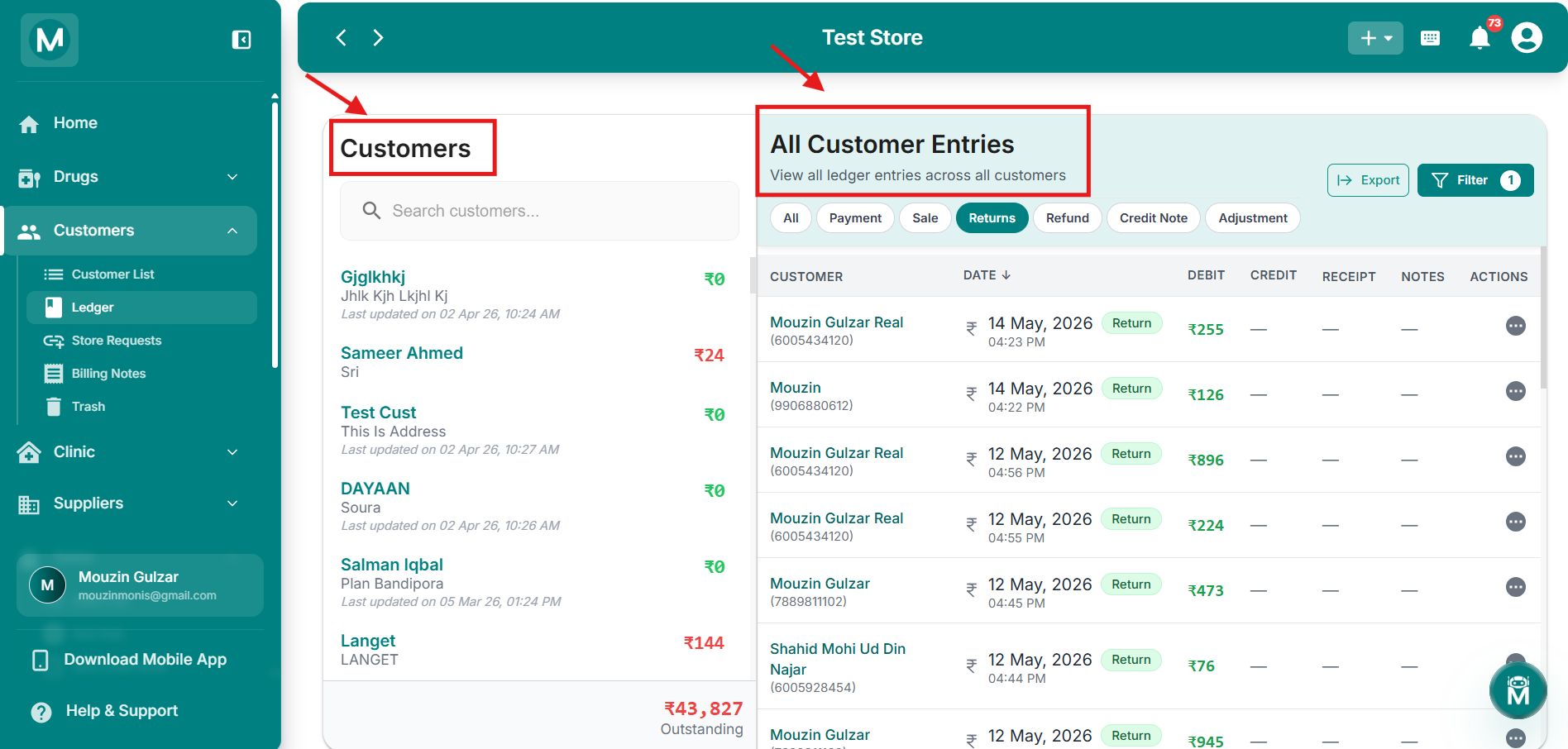
Ledger page layout
Left panel showing customer list, right panel showing ledger entries.
Consolidated View, All Customer Entries
When no individual customer is selected, the right panel shows All Customer Entries, every transaction across all your customers combined in one view.
The entry type tabs at the top let you filter what you see:
The consolidated table has the following columns:
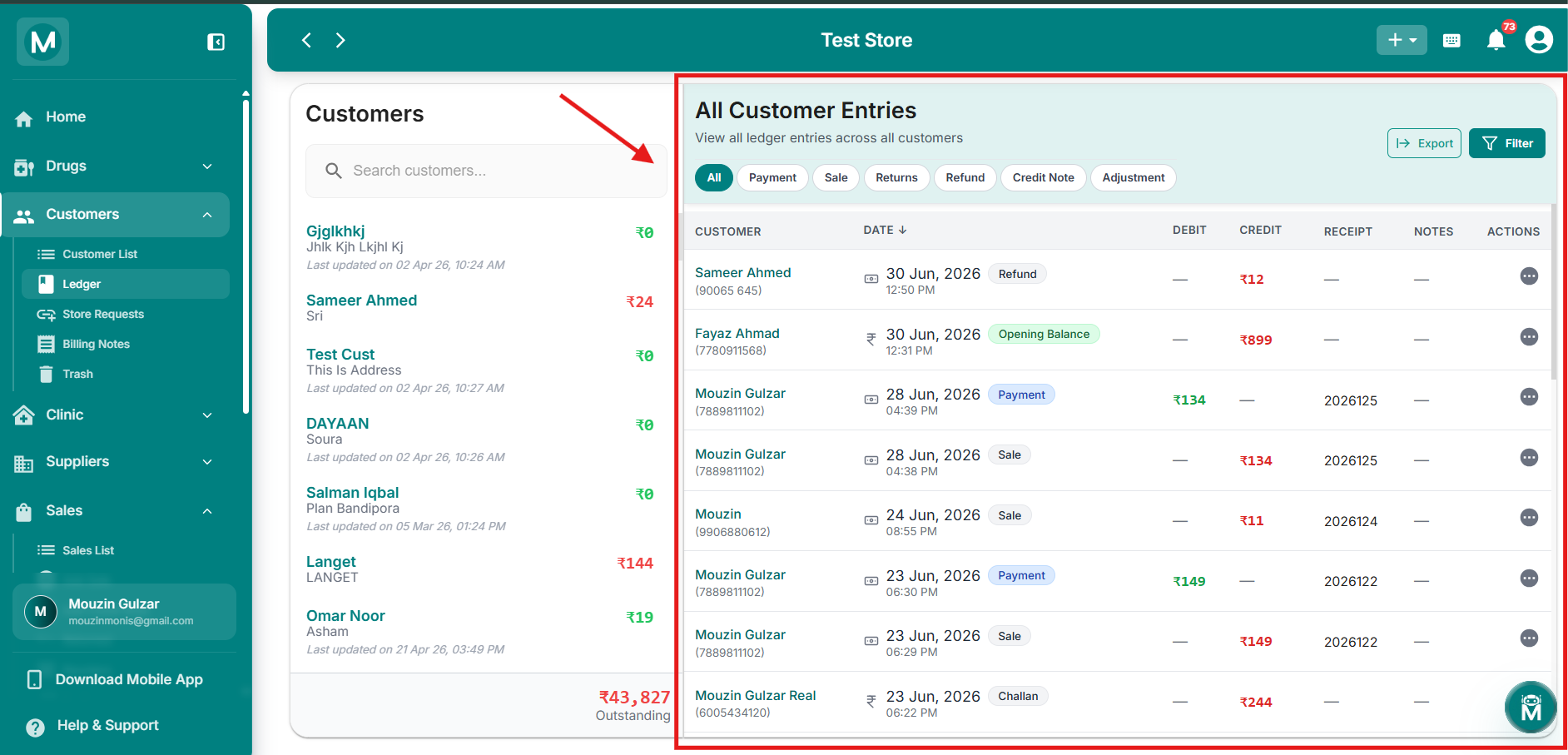
All Customer Entries, consolidated view
Every transaction across all customers in one combined view.
Individual Customer Ledger
Click on any customer name in the left panel to open their dedicated ledger. The right panel updates to show only that customer's transactions.
At the top of the individual ledger you'll see the customer's name, address, and phone number.
Action Buttons
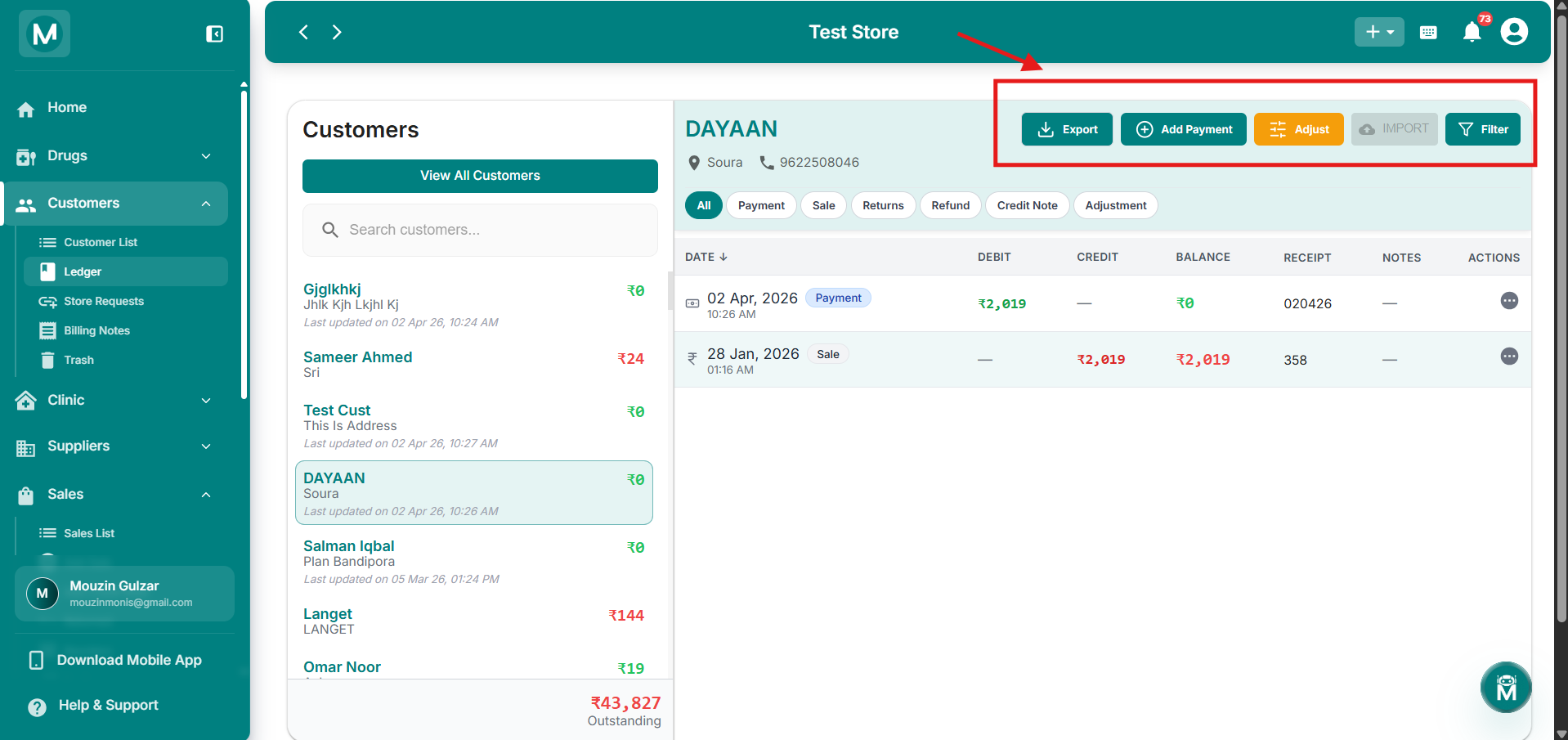
Individual customer ledger, action buttons
Export, Add Payment, Adjust, and Filter buttons at the top of the ledger.
Entry Type Tabs
Same as the consolidated view, filter by All, Payment, Sale, Returns, Refund, Credit Note, or Adjustment.
Individual Ledger Columns
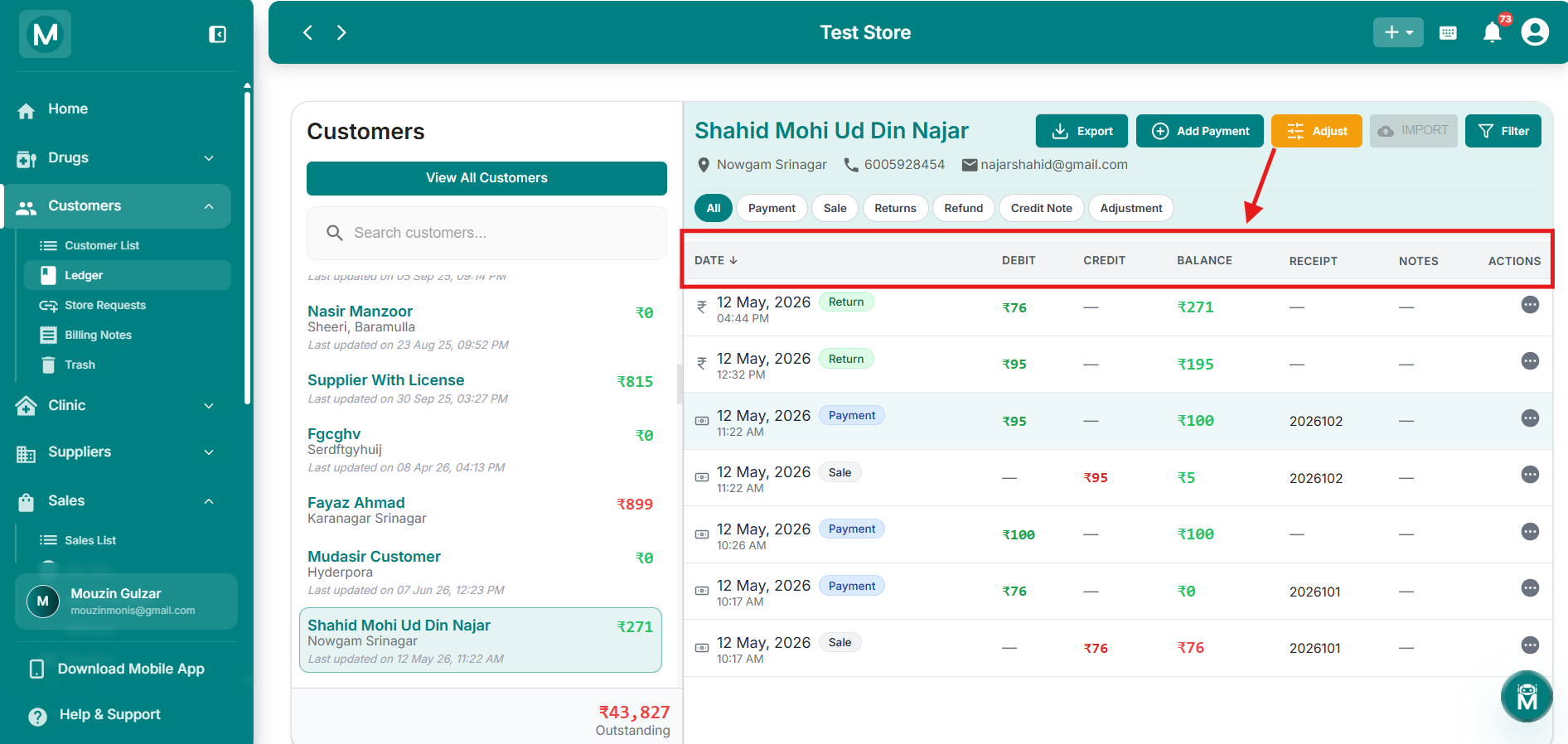
Individual ledger with Balance column
Running balance updates automatically after every transaction.
The Balance column updates after every single entry, so you can trace exactly how the outstanding amount changed step by step from day one.
Adding A Payment Or Refund
Click Add Payment on the individual customer ledger to open the Add Customer Payment dialog. It has two tabs, Payment and Refund.
The dialog also shows a Recent Payments table at the top with a quick link back to the full Ledger, listing recent entries with their Date, Type, Amount, Balance, Receipt, and payment method (Via).
Payment Tab
Refund Tab
Use the Refund tab when you need to pay money back to a customer.
Click Add Payment to save. Click Reset to clear all fields.
Adding An Adjustment Entry
Click Adjust on the individual customer ledger to manually correct the customer's balance, for example a price correction, rounding adjustment, or write-off.
Click Add to save. Click Reset to clear all fields.
Filtering The Ledger
Click Filter on the individual customer ledger to open the Ledger Filters panel.
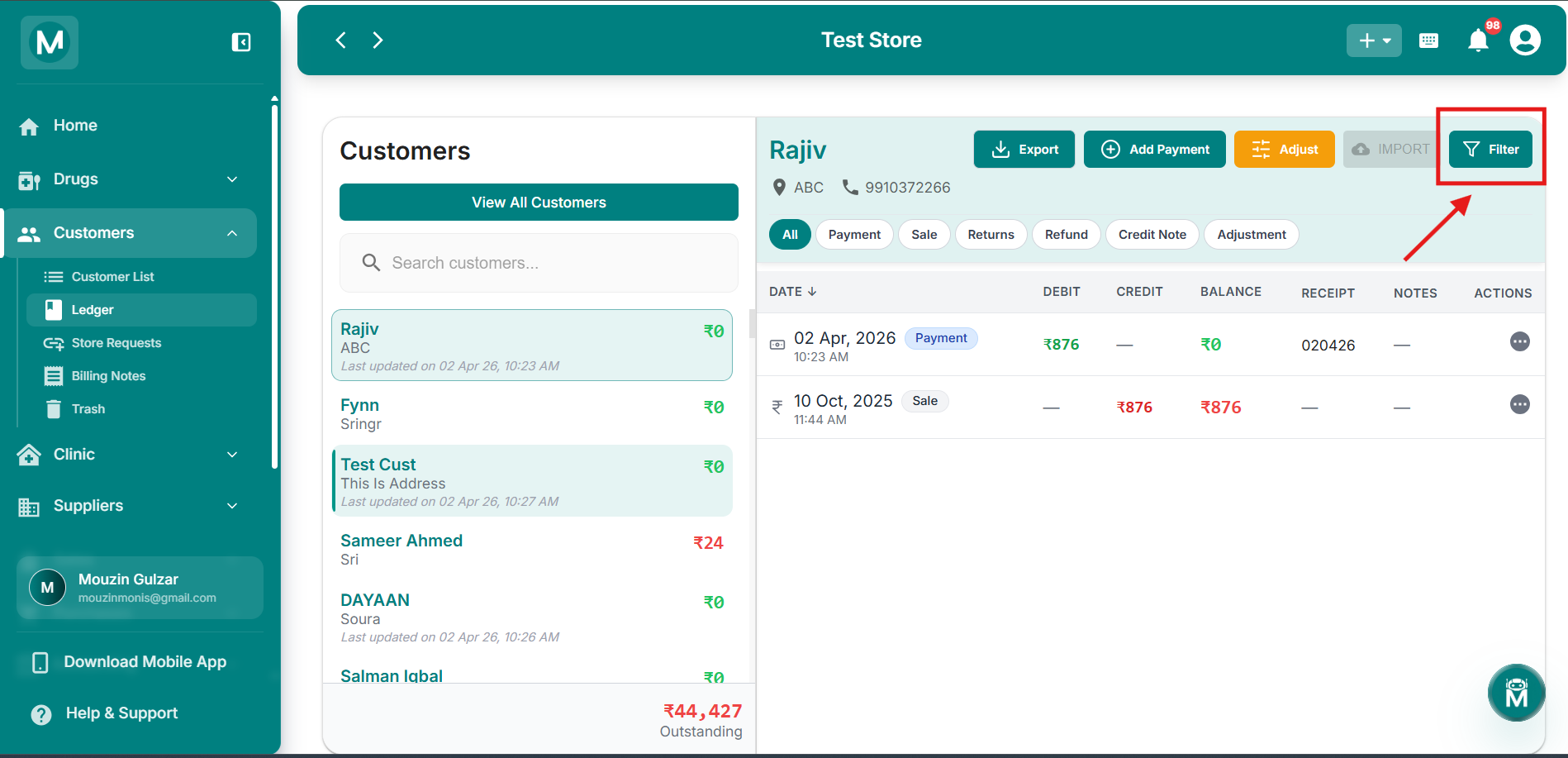
Ledger Filters Icon
Filter by date range and entry type.
You Can Filter By:
Click Apply to apply the filters. Click Clear to reset them all.
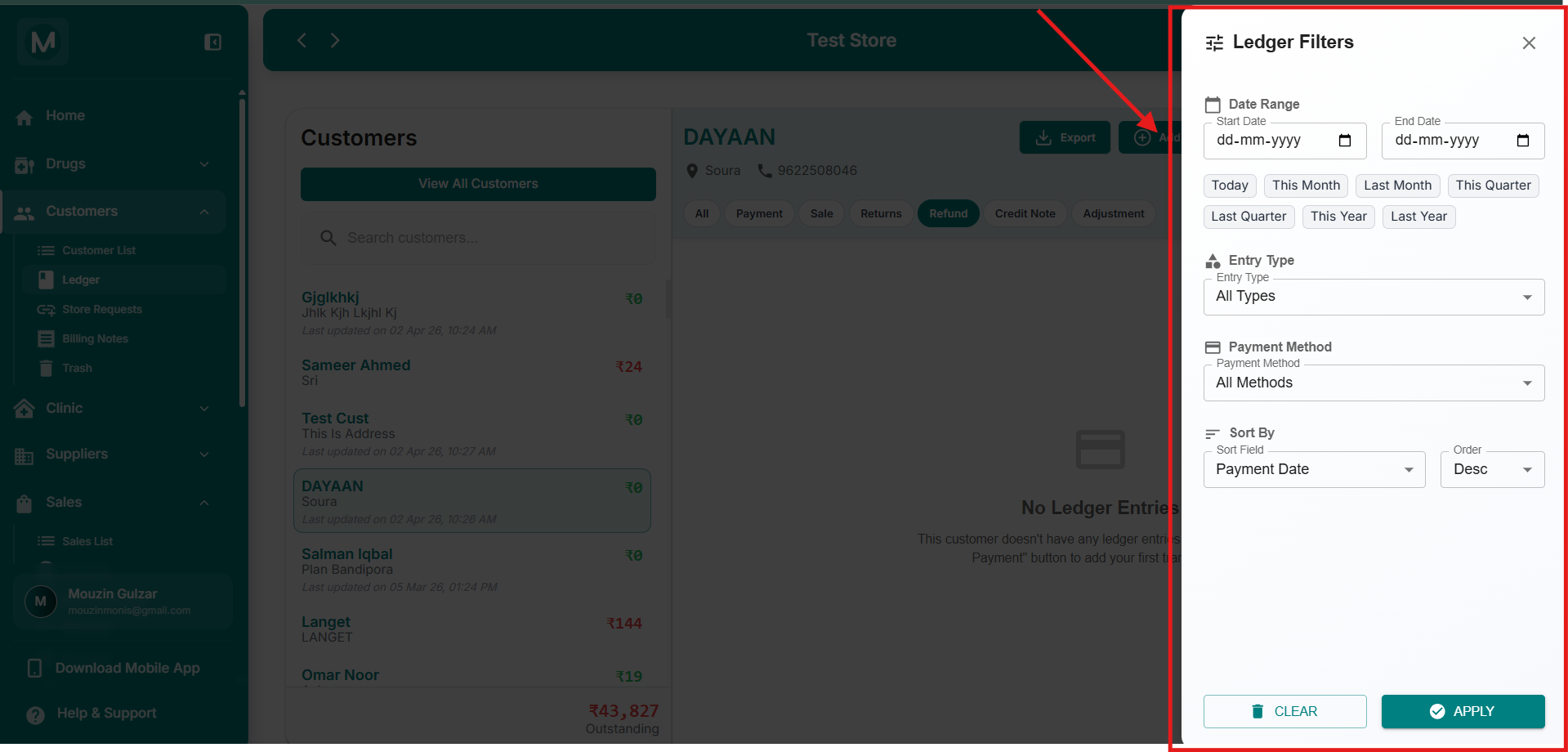
Ledger Filters panel
Filter by date range and entry type with the Entry Type dropdown expanded.
Exporting Ledger Entries
Click Export on the individual customer ledger to open the Export Options dialog. Choose a date range and an export format:
- PDF Document
- Excel Spreadsheet
Click Export to download.
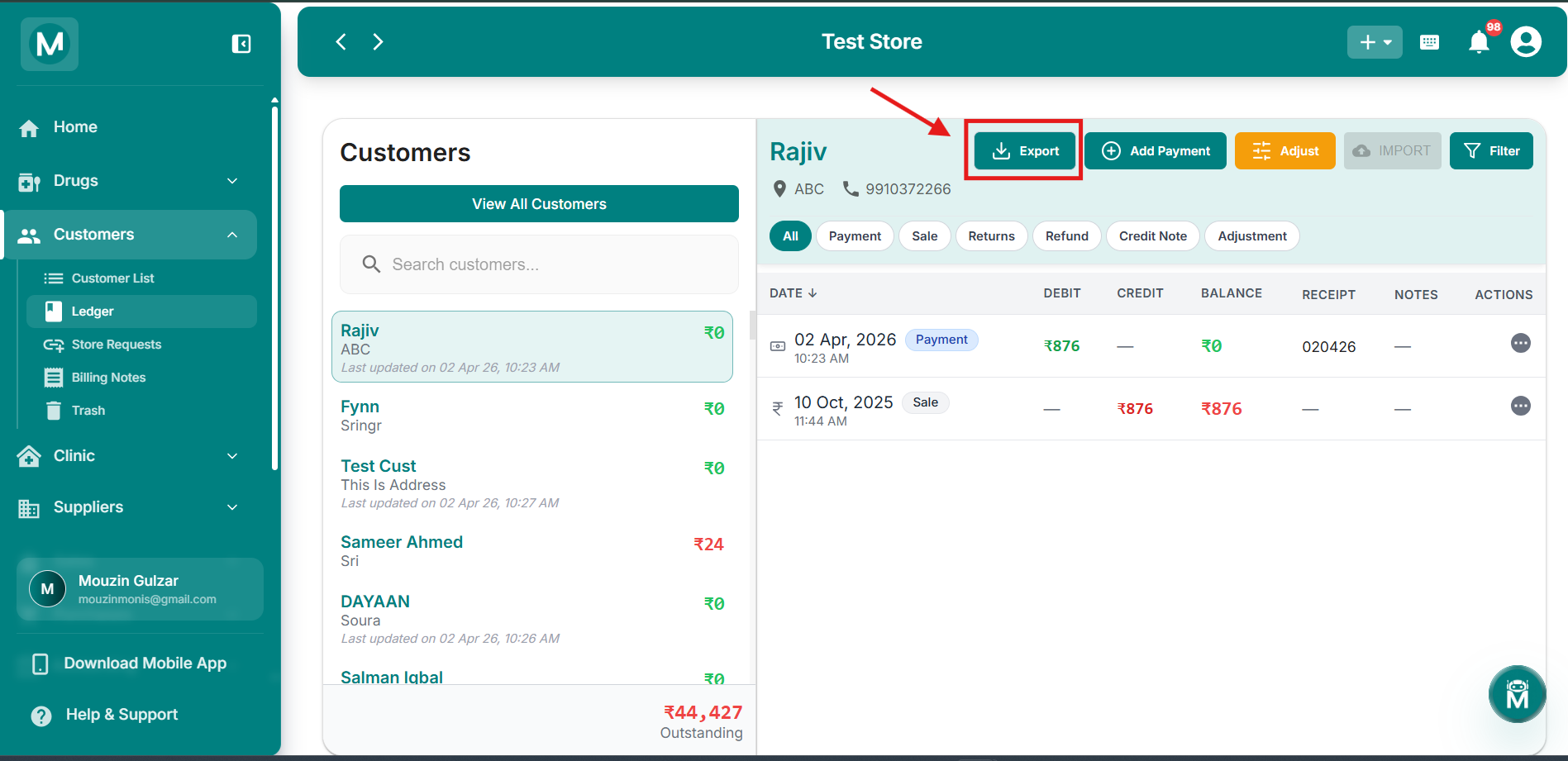
Export Options dialog
Choose date range and export format (PDF or Excel).
Deleting A Ledger Entry
Click the three-dot menu (⋯) on any entry row and select Delete Entry to remove it.
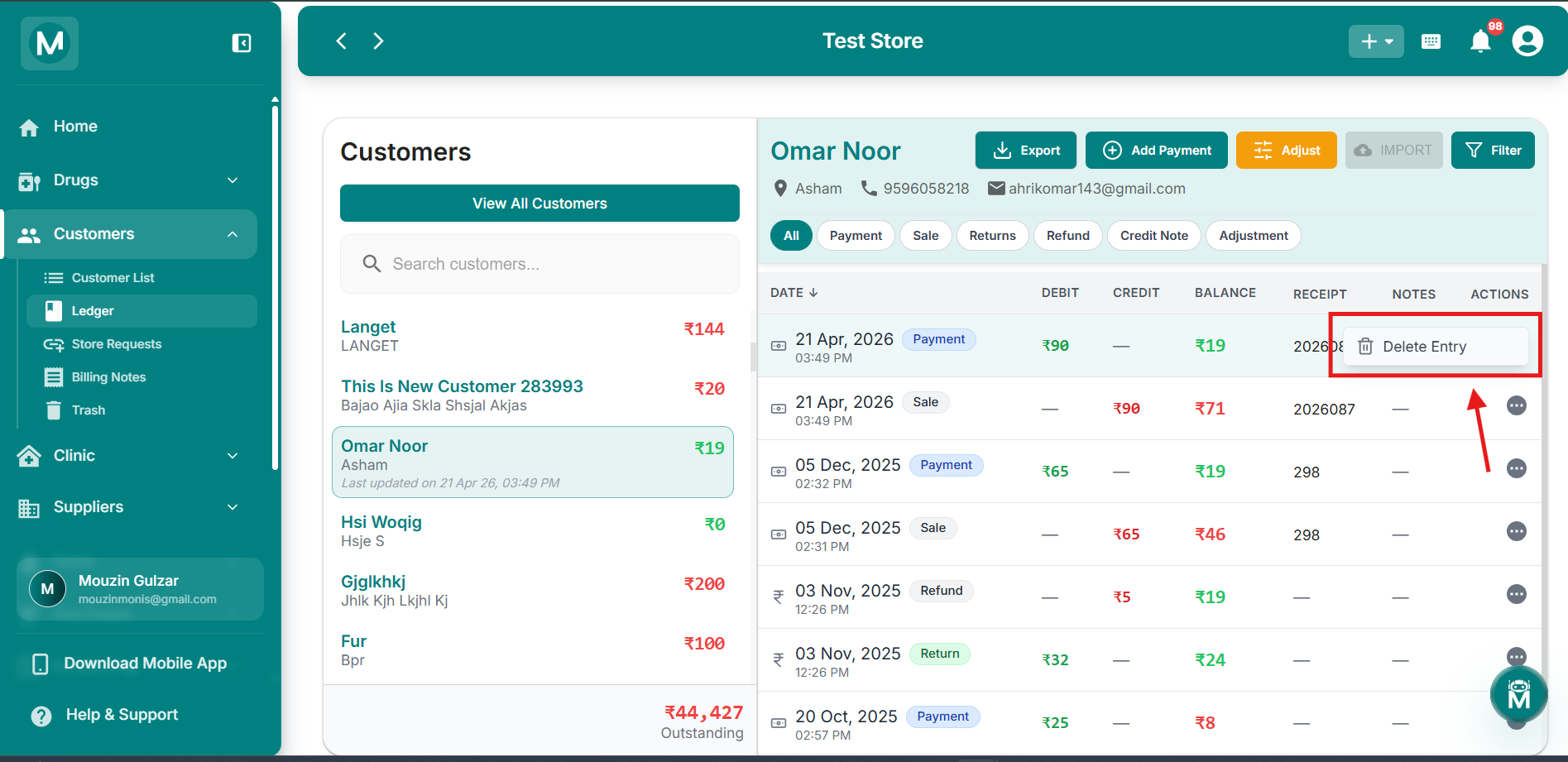
Delete Entry option
Access the delete option from the row actions menu.
Common Mistakes To Avoid
Confusing Refund with Returns
A Return records an item physically returned by the customer. A Refund records the money paid back to the customer. They can happen independently, a return doesn't always mean a refund was issued, and vice versa.